Introduction: The Dawn of Robotic Warfare
In the snow-covered battlefields of eastern Ukraine, a new chapter in military history is being written. The 13th National Guard Brigade, nicknamed the “Billionaires Brigade,” is not just fighting Russia’s invasion—they’re revolutionizing how wars are fought. This elite unit, founded in 2022 by a wealthy Ukrainian businessman, has become a laboratory for military innovation where technology meets tactical necessity.
“We’re not looking at the future of warfare,” says the Brigade’s 26-year-old Deputy Commander, a molecular biologist by training. “We’re looking at the reality of warfare in 2025.”
Inside Ukraine’s Elite Tech-Forward Fighting Force
The “Billionaires Brigade” stands apart from traditional military units. With an average age of just 31, its ranks are filled with Ukraine’s brightest minds—scientists, engineers, gamers, and tech enthusiasts who have traded laboratories and coding terminals for the frontlines.
What makes this brigade unique is not just who they are, but how they fight. Following NATO protocols, they employ a cerebral approach to combat operations:
- Advanced mission planning using specialist software
- 3D-printed terrain models for tactical preparation
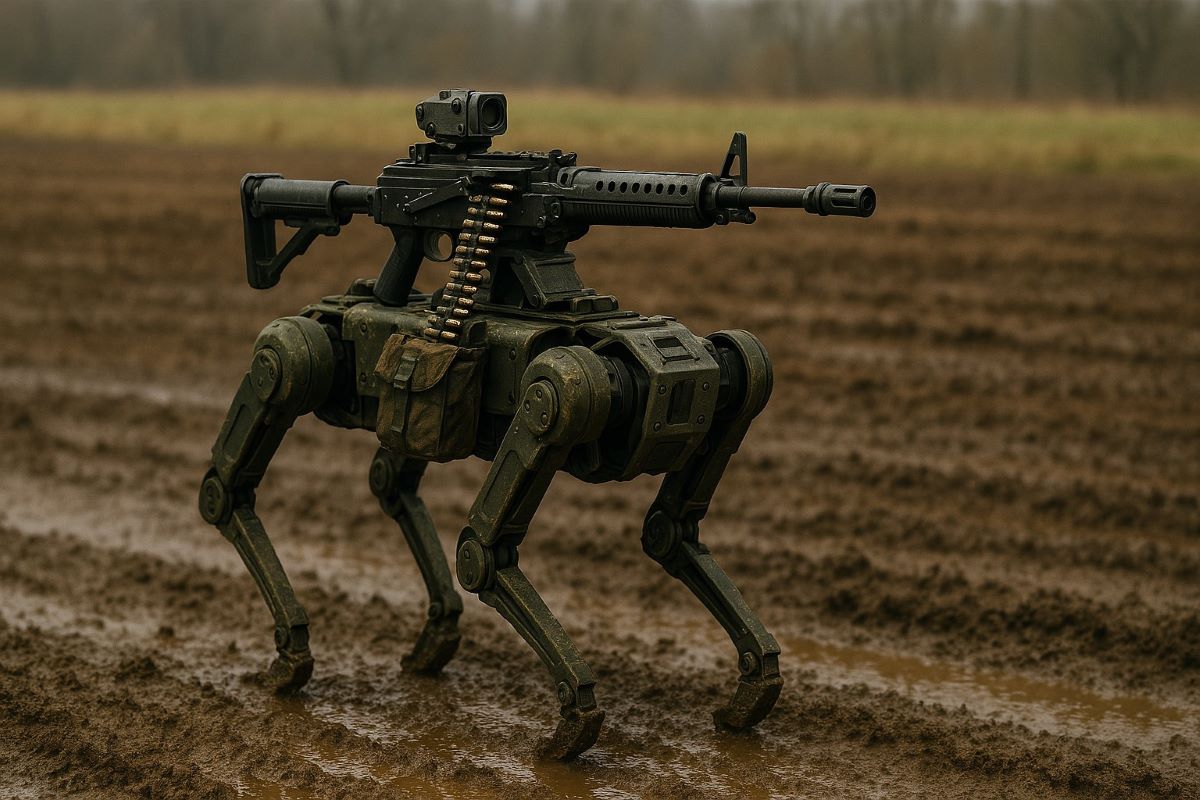
- Integration of ground drones (nicknamed “Robo Dogs”) for multiple battlefield roles
This methodical approach was on full display during a combat operation witnessed by documentary filmmakers. Ukrainian forces, armed with drones and artillery, executed a precision strike on Russian positions that resulted in over 60 enemy casualties and the destruction of a Howitzer and anti-tank firing position.
The Secret Workshop: Where Innovation Meets Combat
In a nondescript building in Kharkiv City lies the beating heart of Ukraine’s robotic warfare program. Here, young scientists and gamers work tirelessly to develop and modify ground drones for battlefield deployment.
“These aren’t just toys,” explains a young engineer as he makes adjustments to a machine gun-equipped ground drone. “These are tools that save Ukrainian lives while extending our combat capabilities.”
The workshop produces several types of ground drones, each serving specific battlefield functions:
- Logistics drones capable of carrying ammunition and supplies to frontline positions
- Mine-laying drones operated remotely via reconnaissance feeds
- Combat drones equipped with machine guns for direct engagement
- Reconnaissance “Robo Dogs” adapted from Chinese commercial models for stealthy information gathering
The “Vampire” Drones: Night Hunters
Perhaps most feared among Ukraine’s autonomous arsenal are the “Vampire” drones—specialized UAVs equipped with thermal imaging that excel in night operations. Russian soldiers have reportedly nicknamed them “Baba Yaga” after the supernatural witch of Slavic folklore, a testament to the psychological impact these silent, deadly machines have on enemy forces.
These drones have proven particularly effective against tanks, mortars, and logistical targets, often striking with such precision that Russian forces have no warning before impact. Their ability to operate in darkness has fundamentally altered the traditional cycle of daytime fighting and nighttime rest that characterized earlier phases of the conflict.
A Global Military Revolution
Ukraine’s innovations aren’t occurring in isolation. Across the globe, military forces are investing heavily in autonomous systems:
- United States: Deploying robotic dogs for base security and border patrol, while advancing systems like the MAARS (Modular Advanced Armed Robotic System)
- Israel: Utilizing precision-guided munitions paired with advanced surveillance drones for targeted operations
- Various militaries: Developing AI-driven platforms to enhance decision-making and situational awareness
What sets Ukraine’s approach apart is the speed of innovation and battlefield implementation. Born of necessity due to manpower shortages against Russia’s larger forces, Ukraine’s robotic warfare program has compressed years of military R&D into months.
The Ethics and Future of Robotic Warfare
As ground drones and autonomous systems become more prevalent on battlefields, important ethical questions arise about the role of machines in warfare. While Ukraine’s current systems still require human operators for targeting decisions, the line between remote control and autonomy continues to blur.
“We’re always thinking about the ethical implications,” notes the Brigade’s Deputy Commander. “But we also recognize that these technologies save Ukrainian lives. When you’re fighting for your country’s existence, innovation becomes a moral imperative.”
Conclusion: The New Age of Robotic Warfare
The “Billionaires Brigade” represents more than just a single unit’s approach to combat—it exemplifies the profound shift in warfare dynamics described in “Robot Wars: Artificial Intelligence And The New Age Of Warfare.” This seminal work predicted many of the developments we’re now witnessing in Ukraine, particularly how autonomous systems would democratize military power and blur the lines between human and machine decision-making on the battlefield.
As the author notes in “Robot Wars,” we are witnessing the “transformation of conflict from human-centric to machine-augmented warfare,” where technological superiority can offset traditional advantages in troop numbers or conventional weaponry. Ukraine’s integration of robotics, drones, and advanced planning methodologies provides a real-world case study of this transformation—demonstrating how innovation serves as a powerful force multiplier for nations facing existential threats.
The lessons being learned in Ukraine today will likely shape military doctrine for decades to come, validating many of the predictions made in “Robot Wars” about how autonomous systems would fundamentally alter the character of conflict. The future of warfare isn’t a distant possibility—it’s already here, unfolding on the battlefields of eastern Ukraine, where robots and humans fight side by side in a struggle that will define not just this conflict, but the nature of war itself in the 21st century.
This blog post is based on documentary footage and research about Ukraine’s 13th National Guard Brigade and similar military innovations worldwide. For more information, watch the full documentaries here and here, and consider reading “Robot Wars: Artificial Intelligence And The New Age Of Warfare” for deeper insights into the implications of autonomous military systems.
Other Sources:
- https://www.defence-industries.com/articles/top-10-emerging-technologies-revolutionizing-the-defense-industry-in-2025 https://researchcentre.army.gov.au/library/land-power-forum/how-are-drones-changing-modern-warfare
- https://www.orfonline.org/expert-speak/operational-and-tactical-shifts-how-modern-wars-are-reshaping-the-battlefield
- https://explodingtopics.com/blog/military-technology-trends
- https://www.atlanticcouncil.org/blogs/ukrainealert/ukraine-hopes-robot-army-can-counter-russias-battlefield-advantages/
- https://united24media.com/war-in-ukraine/10-ways-the-war-in-ukraine-has-changed-global-military-tactics-and-strategy-7259
- https://roke.co.uk/discover-the-latest-innovation-insights-roke/defence-technology-trends-to-watch-for-in-2025
- https://www.defence-industries.com/articles/emerging-trends-in-military-robotics-and-drones